
Travel
Day Trips from Heidelberg: The Best Places to Go in the Region
Heidelberg sits exactly where the Neckar leaves the Odenwald hills for the wide Rhine plain, which makes it a very good base. Castles, baroque gardens, a Roman town and forest trails are all close enough to see and be back for dinner.
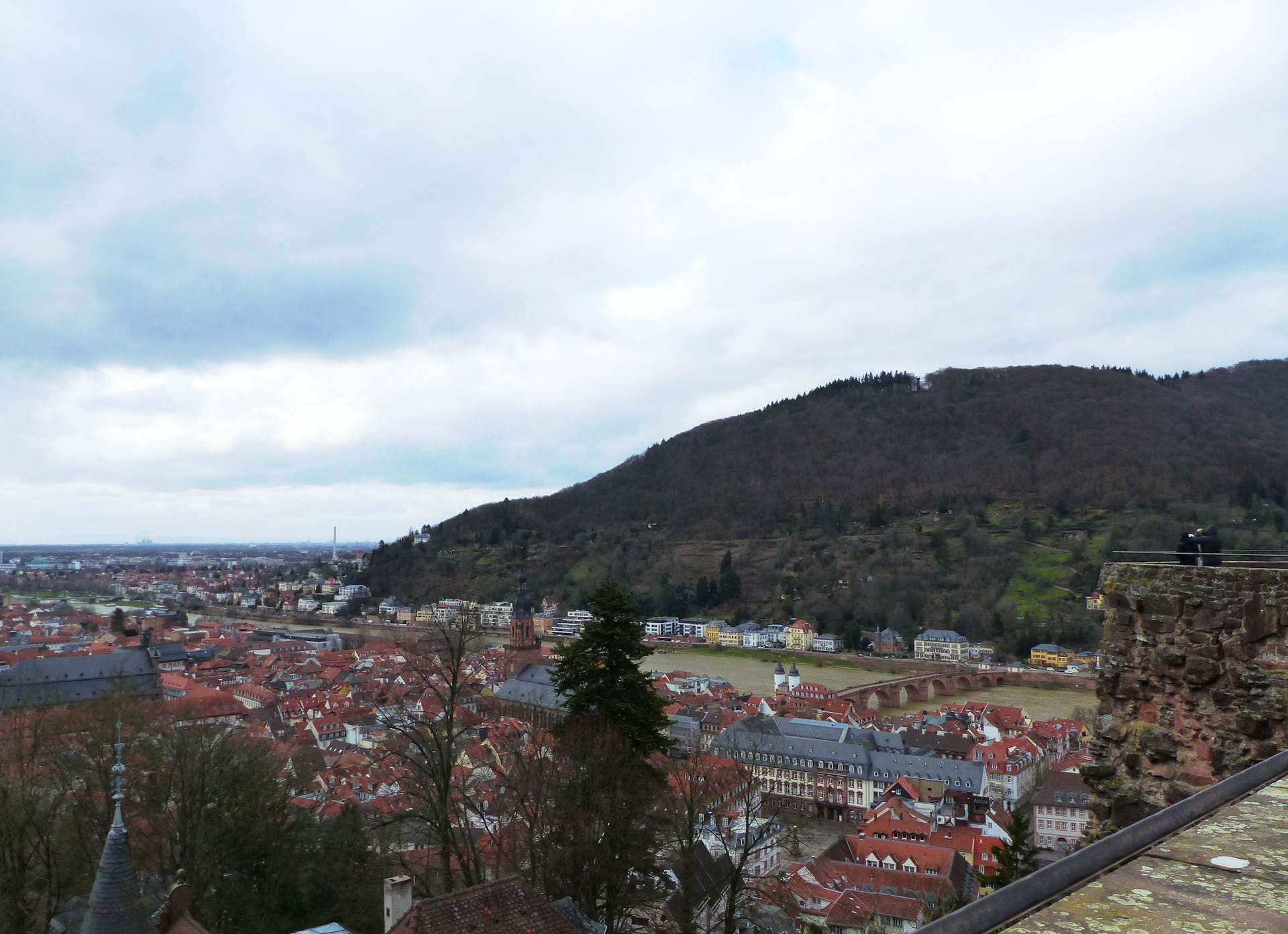
You do not have to leave Heidelberg to fill a week. But the region around it is unusually varied for such a small area, and almost everything worth seeing is within an hour of the Hauptbahnhof (main station). Here is what is actually worth a day.
The Neckartal: castles the whole way up
Head upstream and you enter one of the most photographed river valleys in Germany. Neckargemünd comes first, then Neckarsteinach, known as the Vierburgenstadt, the “four castle town,” because four medieval castles sit within a few hundred yards of each other. High above the river is Dilsberg, a car free hilltop village whose ruined fortress and walk through tunnel to the old well are a reliable hit with kids.
Further upstream come Hirschhorn, called the pearl of the Neckar valley for its castle terrace, and finally Bad Wimpfen, a Hohenstaufen imperial town on a bluff above the river with an imperial palace, the Blauer Turm (Blue Tower) and one of the finest half timbered old towns in southern Germany.
You do not need a car for any of this. Excursion boats leave from the Heidelberg Old Town and run up the valley, which is the relaxed way to watch one castle after another slide past. The whole route belongs to the Burgenstraße (Castle Road), a signposted tourist route that runs from Mannheim all the way to Prague.
Baroque and two more castles: Schwetzingen and Weinheim
About 15 minutes west by car lies Schwetzingen, famous for its palace and the enormous palace gardens with a mosque, a hedge theater and baroque water features. In spring the town is also Germany’s asparagus capital, which is reason enough to build a long lunch into the plan.
To the north is Weinheim, the Zwei-Burgen-Stadt or “two castle town” on the Bergstraße. The Wachenburg and Burg Windeck look down on a picture book old town, while the Schlosspark holds an Exotenwald, an arboretum of cedars, sequoias and ginkgos collected from around the world. The historic market square is worth the detour on its own.
History you can walk through: Speyer and Ladenburg
A little further out but worth every minute is Speyer, whose vast Romanesque imperial cathedral is a UNESCO World Heritage Site. Next door, the Technik Museum has aircraft, a submarine and a real space shuttle, which makes it one of the better rainy day options in the region. The old town between the Altpörtel gate and the cathedral square is compact enough to do both in one day. There is an overview of the sights sorted by visit length and admission at Sehenswürdigkeiten in Speyer.
Much closer, essentially on Heidelberg’s doorstep, is quiet Ladenburg. The Romans founded Lopodunum here, and today a good local museum and one of the best preserved half timbered old towns in the region tell that long story.
Forest and wine: the Odenwald and the Bergstraße
Directly east the Odenwald begins, a low mountain range full of trails, quiet valleys and folklore. The classic stop is the Felsenmeer near Lautertal, a “sea of rocks” where enormous granite boulders spill down a hillside and everyone ends up scrambling. Deeper in the forest sit storybook Michelstadt, whose half timbered town hall is one of the most photographed buildings in the region, and neighboring Erbach with its palace and ivory museum.
If you would rather take it slowly, follow the Bergstraße instead. This is one of the warmest corners of Germany, and it strings together small wine villages with seasonal Straußwirtschaften, the informal taverns growers are allowed to open for part of the year. Almond blossom in spring and the grape harvest in fall are the two best windows.
Right above the city: Königstuhl and Heiligenberg
Some of the best short trips start at the edge of the Old Town. The Königstuhl is Heidelberg’s own mountain at 568 meters, roughly 1,860 feet, and the historic funicular takes you up without a hike. Details on getting there and on the trails are in our guide to the Königstuhl.
Across the river rises the Heiligenberg, with the eerie Thingstätte, an open air amphitheater built in the 1930s, plus monastery ruins and the Philosophenweg (Philosophers’ Walk). Both are walkable from the city and make a good half day when there is no time for a full trip.
Getting there
The nice thing about this region is that nearly everything works without a car. The Verkehrsverbund Rhein-Neckar (VRN), the regional transit network, connects Heidelberg by S-Bahn and regional train to Schwetzingen, Speyer, Weinheim, Neckargemünd and many Odenwald towns, often every half hour. Cyclists follow the well built Neckartalradweg (Neckar Valley Cycle Path) upstream through the valley, and in summer the excursion boats fill in the gaps. Only the more remote Odenwald villages really call for a car, and even there it is convenience rather than necessity.
When to go
Spring is lovely along the Bergstraße when the almond and cherry trees flower, and fall is gold and busy with the grape harvest. Summer sends people into the cool forests and onto shaded riverbanks, and in December the small half timbered towns run Christmas markets that feel a world away from the big city versions.
One piece of advice: plan one or two stops a day, not five. Between the Neckar, the Odenwald and the Bergstraße, almost every town here rewards staying a little longer than you meant to.